

scb10x Metaverse
SCB 10X Head Quarters in the Sandbox Metaverse
In the creation of the Metaverse, much like in the design of products, architecture, or games, the primary objective is to deliver an unparalleled user experience. The ambition is to craft an environment so engaging and delightful that users lose track of time; this is a common thread linking three distinct architectures: the mall, the casino, and the amusement park. Each of these spaces, while unique in their objectives, converges on the same goal: to deeply immerse users within the experience, making them oblivious to the passage of time.
Scope
Research
Concept Design & Development
Narrative Building
3D Modeling
Metaverse Game Design
Project Management
Team
Alliya Suthikorncompee
Kan Vajaranant
Nichakarn Vichitpunt
Nuttcha Paopahon
Prapasri Khunakridatikarn
Tatiya Visetri
Duration
6 Months
Year
2022-2023

About the Project
Interaction between users and the virtual world can be divided into two categories: the interaction upon the environment and the interaction that is caused by the new way that the space is defined. The interactive environment comprises two types: people interacts with the space and the reactiveness of the space.
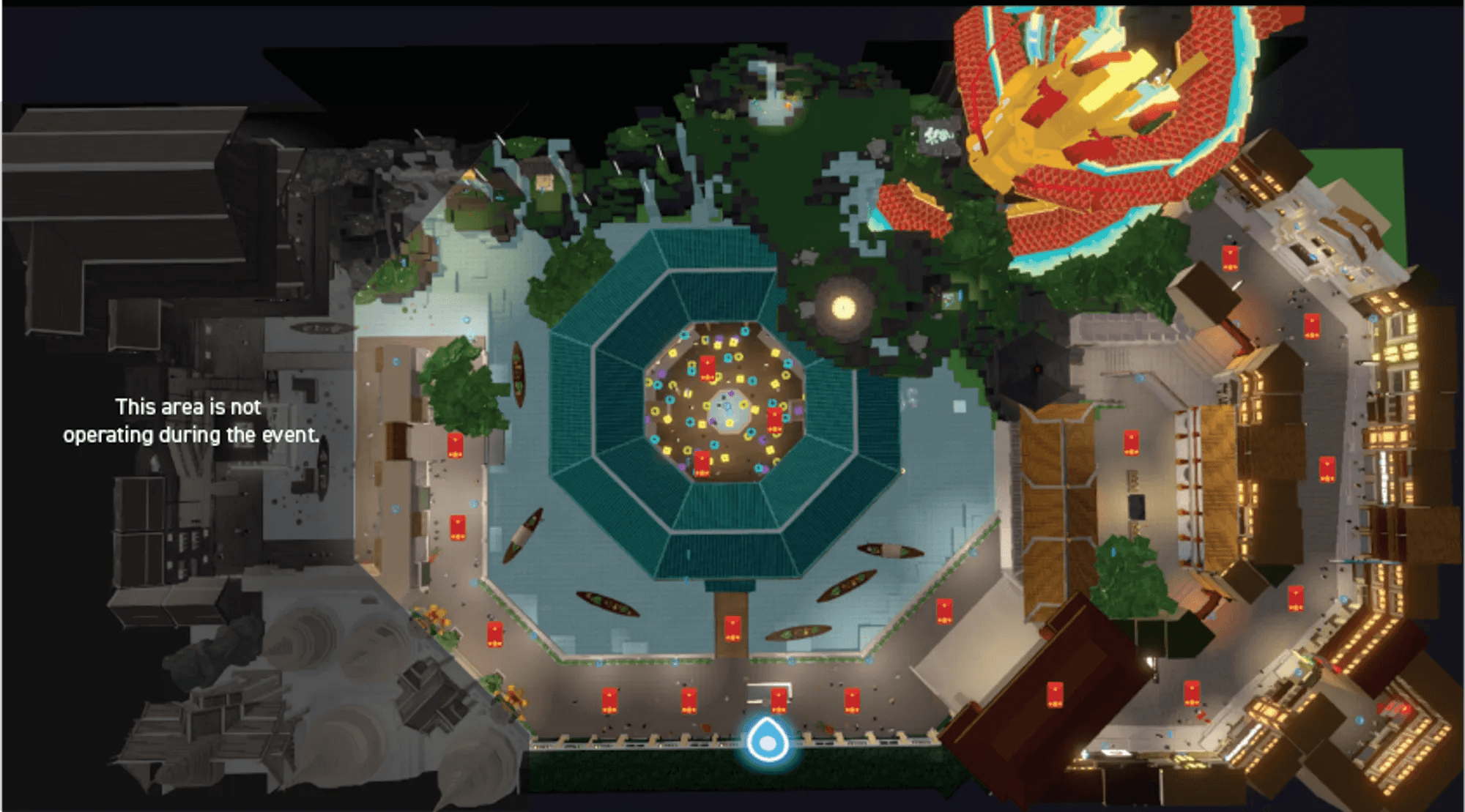
In the Metaverse, quests are added as a part of encouraging and incentivizing people to interact with the space and the surrounding environment. Quests may be used as a tour guide that allows people to explore every corner of the land so that they are accustomed and can easily navigate inside the space without using a map. Drawing inspiration from the classic trail-tracing strategy of Hansel and Gretel, the Metaverse incorporates numerous scavenger hunt quests as a means of navigation for users. These quests serve as a mechanism to ensure that users have a better navigation around the space while attempting to complete their objectives. For example, within the SCB 10X headquarters, red envelopes are strategically placed to guide visitors to the starting point of the weekly quest. This approach is particularly effective in open spaces where directions might be unclear.
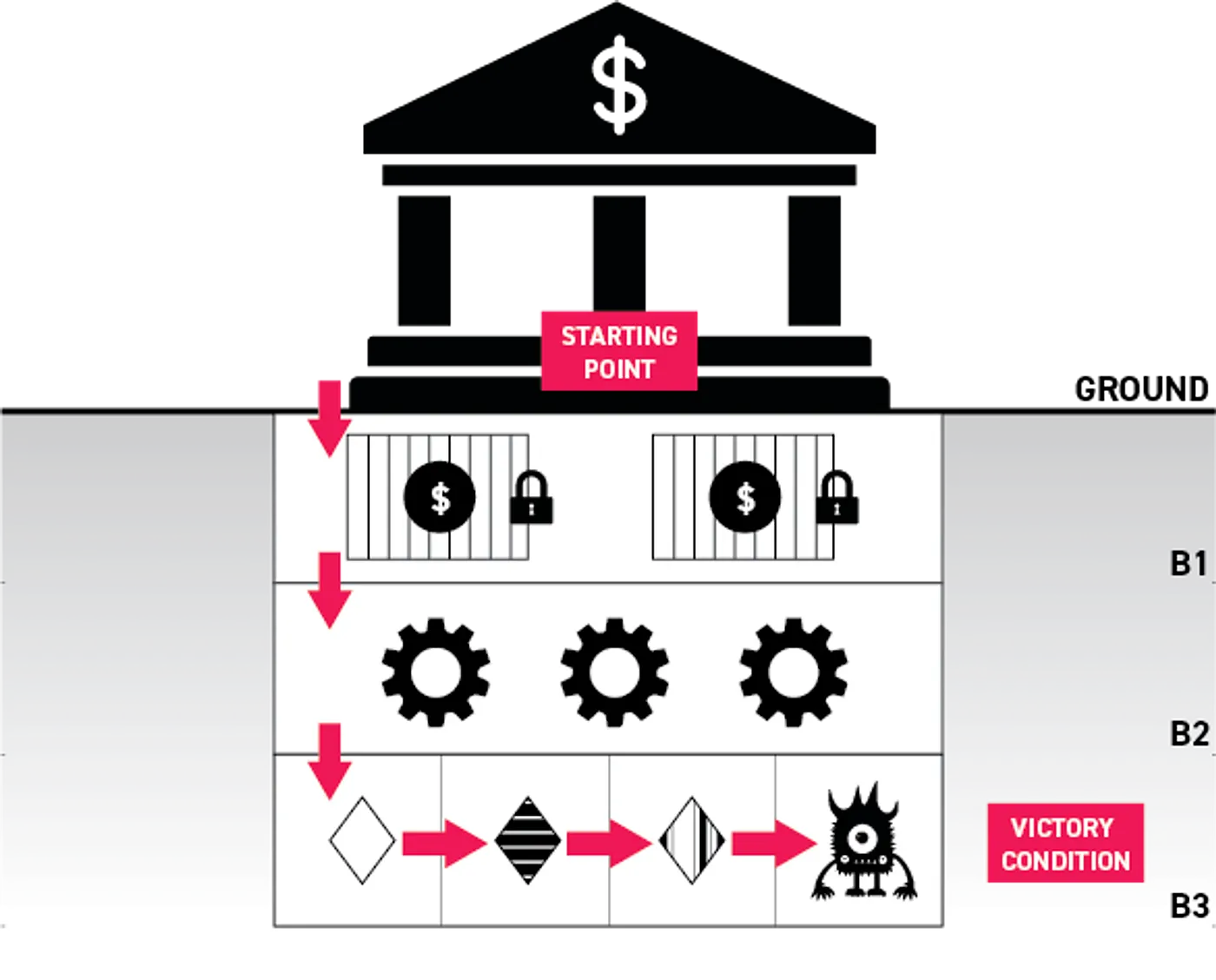
In another SCB 10X experience, the Vault Adventure, a similar scavenger hunt is employed. However, this experience is designed for a single player, allowing SCB 10X to observe user engagement and the effectiveness of gamification strategies. Although the space is designed to be linear, with a clear end goal, the addition of voxelites in the underground quest, where a conveyor belt serves as a platform for a racing game, aids users in completing the quest more efficiently. The scavenger hunt isn’t the only interactive experience that allows visitors to be immersed inside the experience.

One definition of immersive is having one’s identity as a unified part with the experience. Besides the scavenger hunt quest, the interactive quest could transform the space or an object or the environment which enhances the level of immersion to an experience. At SCB 10X headquarters during the Lunar New Year campaign, the interactiveness is used to allow people to be a parade leader if they dress their avatar with the variable. In the Universal Studio, the Wizarding world of Harry Potter experience, the interactive wands can be used to activate the scene in front of them. This mechanic enables the users to immerse themselves as they are one of the witches or wizards in the Wizarding World.

The interaction that humans create with the environment, whether it is to allow their identity to be integrated with the environment, being the one who activates some movement, or transform the experience, will create the sense of belonging of the experience to the visitors.
Narrative Driven Experience
In the design of narrative-driven experiences within the Metaverse, the storyline, journey, and theme play pivotal roles in shaping user engagement. The purpose of the experience acts as a gateway for users, akin to a book cover, providing a clear understanding of the space’s essence. This clarity, much like a strong brand identity, immerses users in the experience, guiding their interactions and activities within the virtual environment.
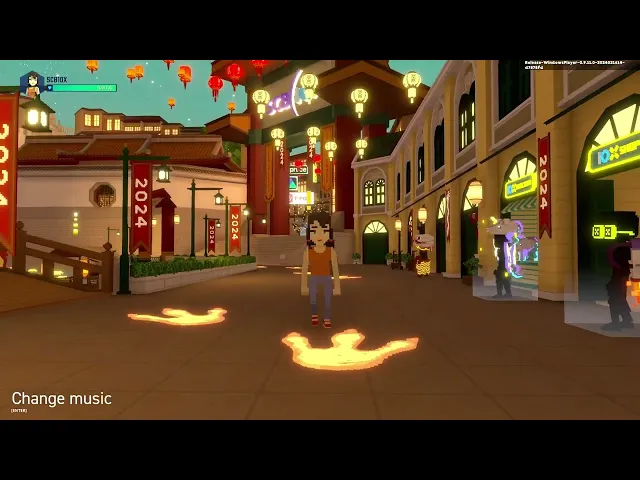
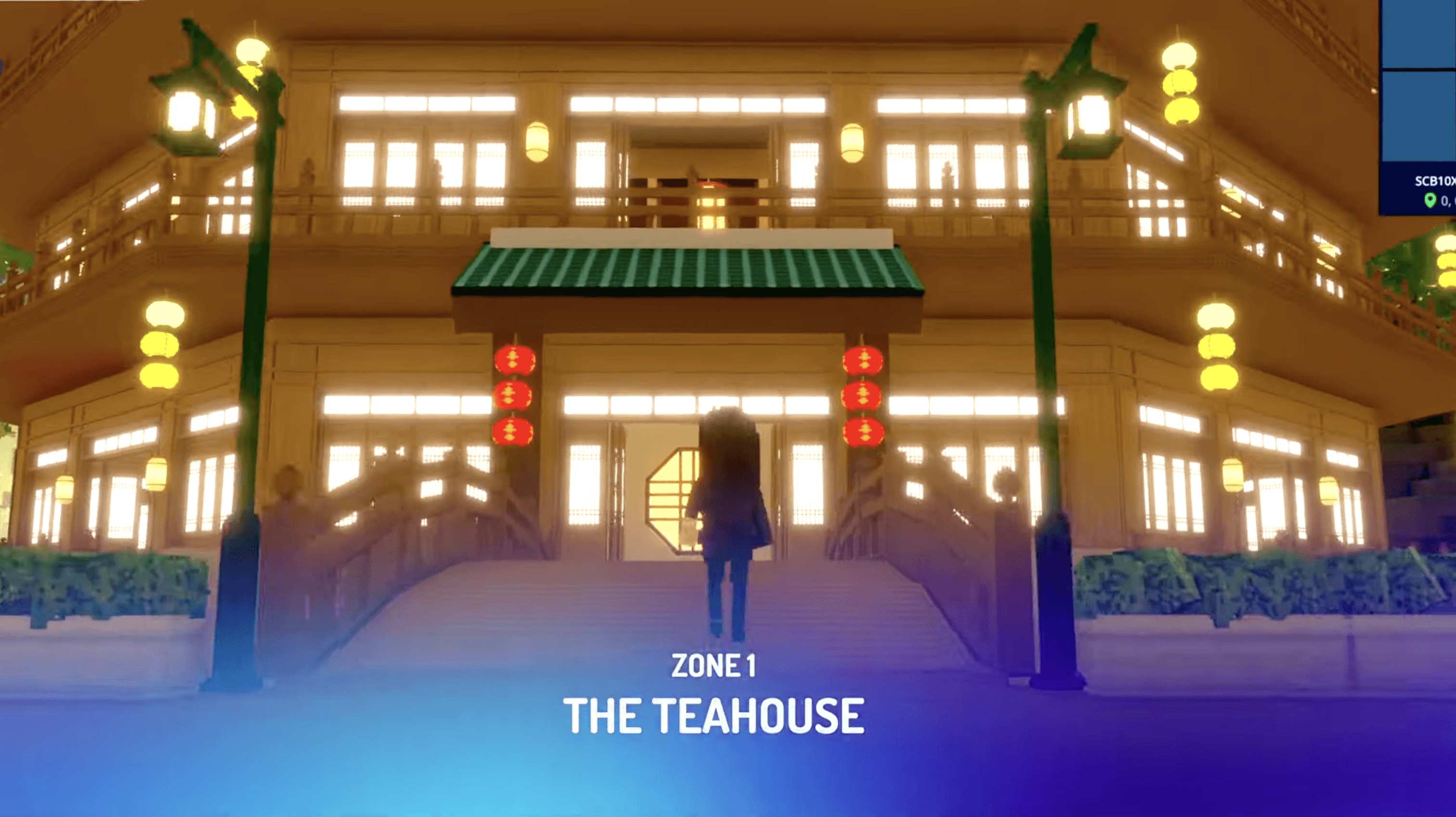
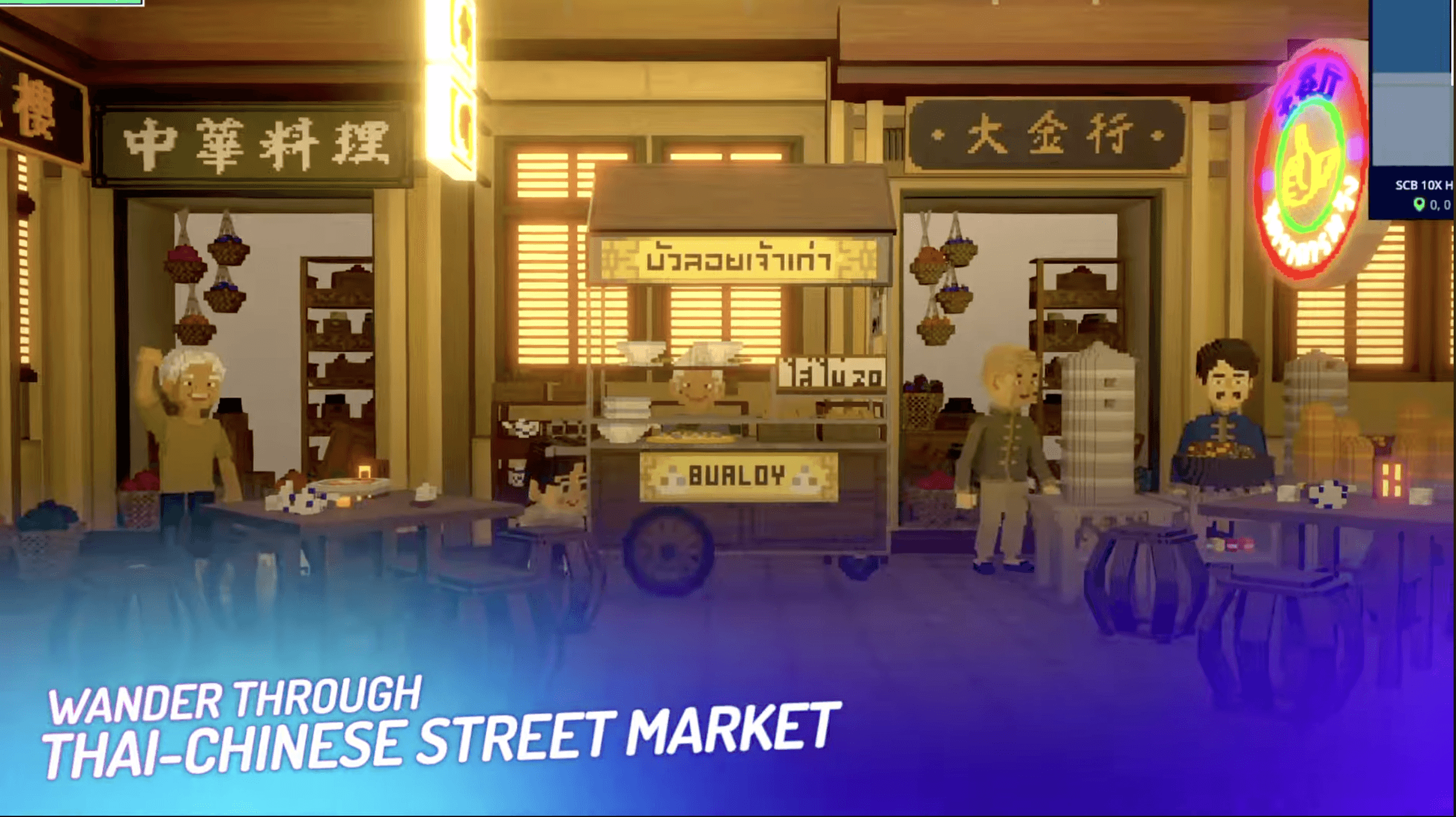
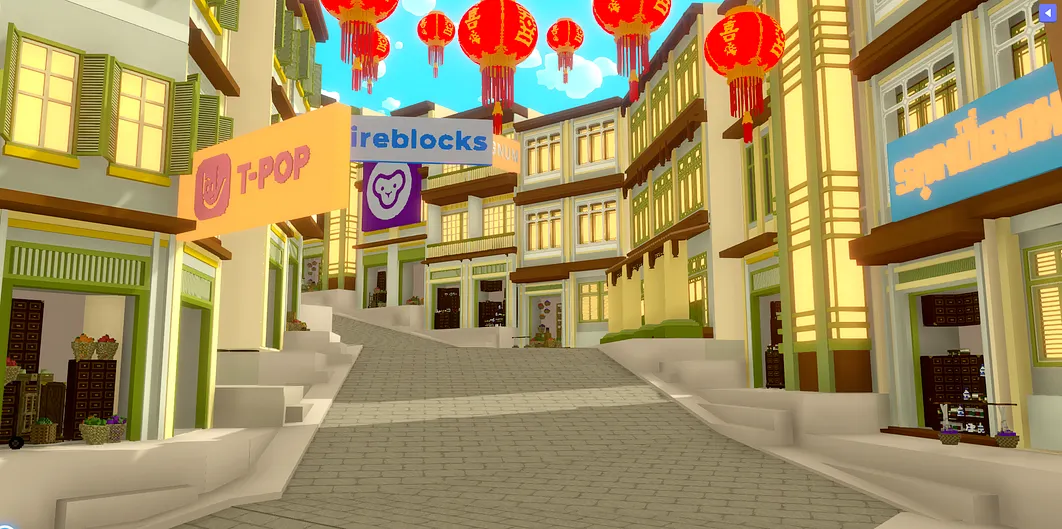
The concept of the whole SCB 10X HQ is the evolution through time of the company. The LANDs are divided into three zones representing the past, present, and future of SCB 10X. In the first phase of the design, the past of SCB 10X is interpreted as the solid foundation of the company which is the Bank. The HQ depicts the environment from the period in which the bank started operating. The bank had associated with merchant and local businesses; the first phase comprises three parts representing three themes — Chinatown walking streets, Thai floating market, and the teahouse that weaves two intertwining cultures that are well-rooted and associated with Thailand’s trading culture: Thai and Chinese.

Semiotics, traditionally used for way-finding in the physical world, assumes a different role in the Metaverse. Drawing from Jean Baudrillard’s concept of “Simulation and Simulacra,” the virtual space becomes a simulacrum where signs and symbols guide users through the journey as intended. The space planning and layout serve as intuitive cues, much like the ideas presented in Robert Venturi’s “Learning from Las Vegas,” where the architecture and design communicate the function and flow of the space. In the Metaverse, the absence of literal arrows is replaced by the use of light, shapes, and spatial arrangements, creating a seamless and immersive experience that encourages users to explore and engage with the environment in a meaningful way. In the social hub experience of SCB 10X headquarters, the layout of the space is designed to be simple as one side is for Thai town, the other side is Chinatown and in the middle is the conglomeration of Thai and Chinese culture, so that the visitor can have a clear understanding of where things are. However, it still has some pocket hidden spaces that require people to thoroughly explore to be able to discover the space.

Sensory Enhancement
Humans perceive the world through five senses: visual, audio, texture, taste, and smell. With the limitation of current technology, consumer-grade metaverse only offers the perception of the experience through visual and audio. Therefore, sensory enhancement is a critical component in the design of immersive experiences in the Metaverse to balance.
Visual elements are crucial. A 360-degree visual experience, with an emphasis on details, can captivate users, making them lose themselves in the intricacies of the virtual world. When the virtual world is being developed, the greyboxing technique is implemented to help designers map out and have a hands-on spatial experience to see how the environment feels like as the avatar. Then, the details are added on once the overall dimensions are solid. Once the details are added on, the experience will be full of depth and elaborations. Moreover, the use of color is a vital part that allows the details to be seen clearer; the balance between brightness and darkness creates contrast, while harmony in hues makes the experience more pleasant to the eye, echoing the principles of visual harmony found in Venturi’s work.

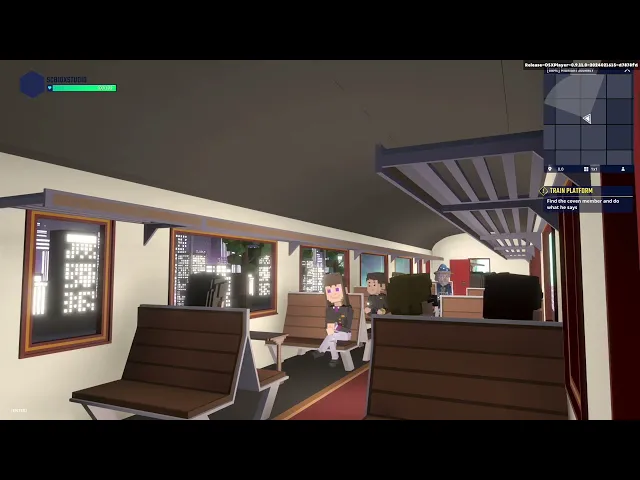
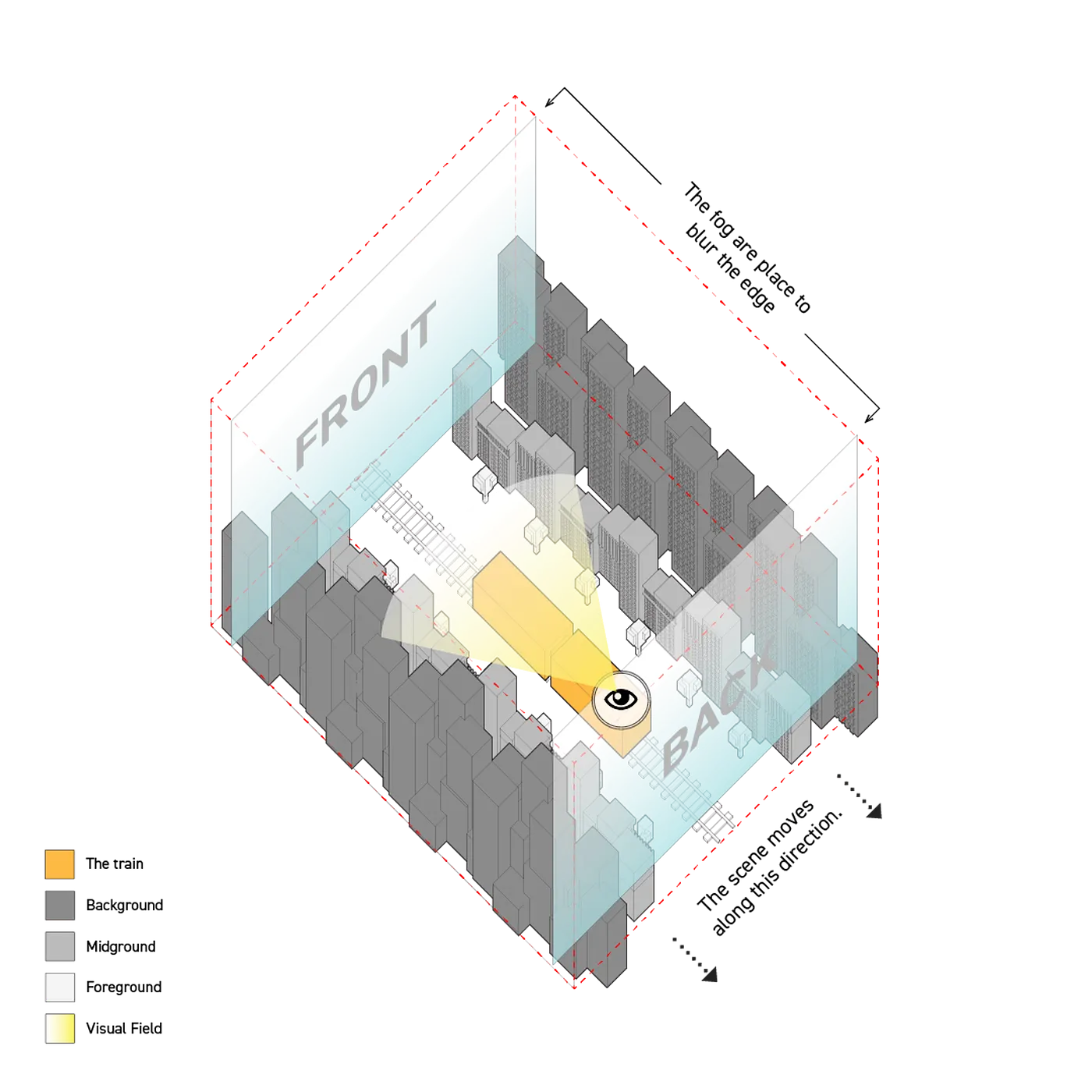
Besides being completely surrounded by 360 elements with a high level of intricacy, movement, achieved through video, VFX, and animation, adds dynamism to the space, making it feel alive. The visual effect will help fill the air with dynamics and, in some cases, become a point of interest in the environment. SCB 10X’s Metaverse team also conducted experiment on creating a parallax effects where the objects on the scene moves with different speed. In the example below, the parallax effects is used to create a moving train scene. By having a background, mid ground, and foreground moves to the back, while the observation location is static, creates an illusion that the train is currently moving forward.
Lighting and environmental effects are fundamental in setting the atmosphere, much like the neon lights of Las Vegas that create an otherworldly experience. In the HQ, The utilization of emissive material brings out the brightness tone to the scene. The subtractive lighting is also added on top to create a dynamic to the space.

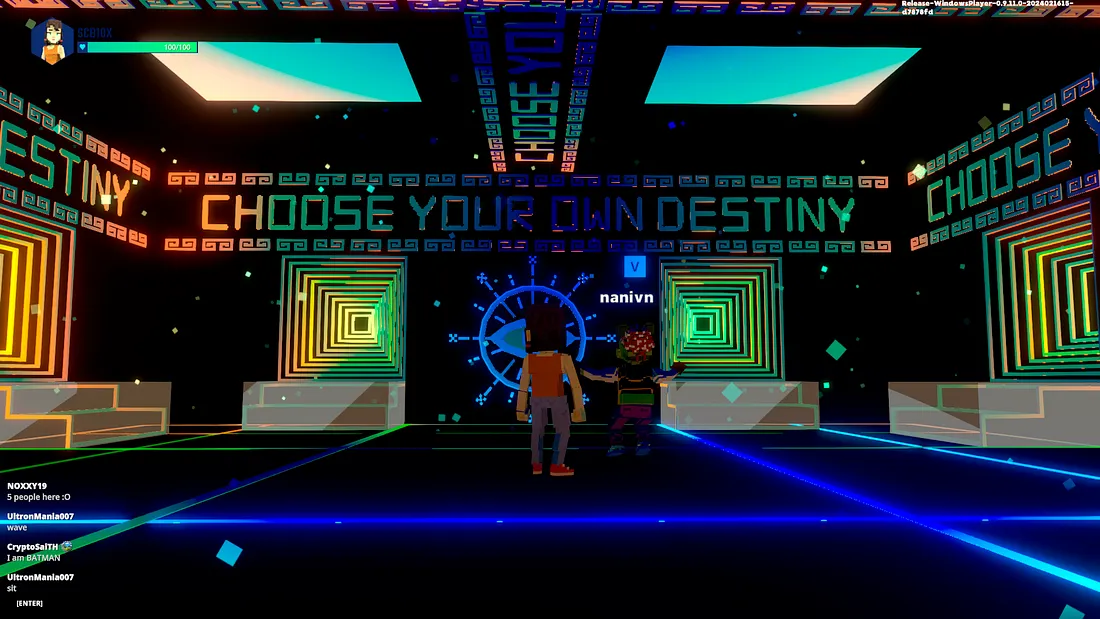
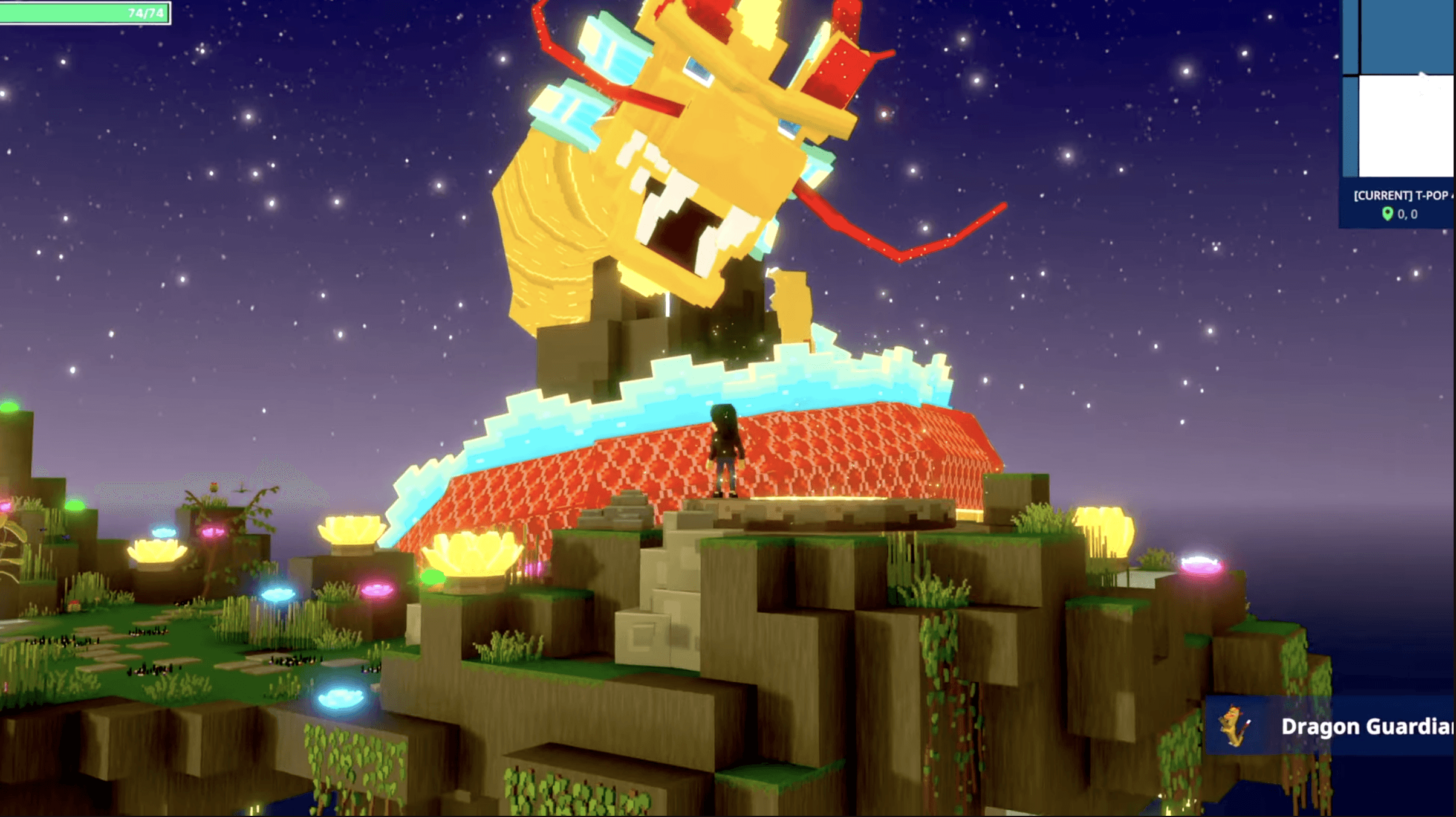
Lastly, the incorporation of surreal elements, such as unusual scales or impossible structures, challenges users’ perceptions and encourages them to think beyond the confines of reality, drawing on the concept of the hyperreal and the blending of the real and the simulated. An impossibly large structure in comparison with the avatar is used in many places in SCB 10X to give the sense of surrealism and hyperrealism.